Abraham is old. He makes his servant swear to find a wife for his son Isaac among his own family, in Aram Naharaim. The servant, whom the text never names (tradition calls him Eliezer), sets out with ten camels loaded with gifts.
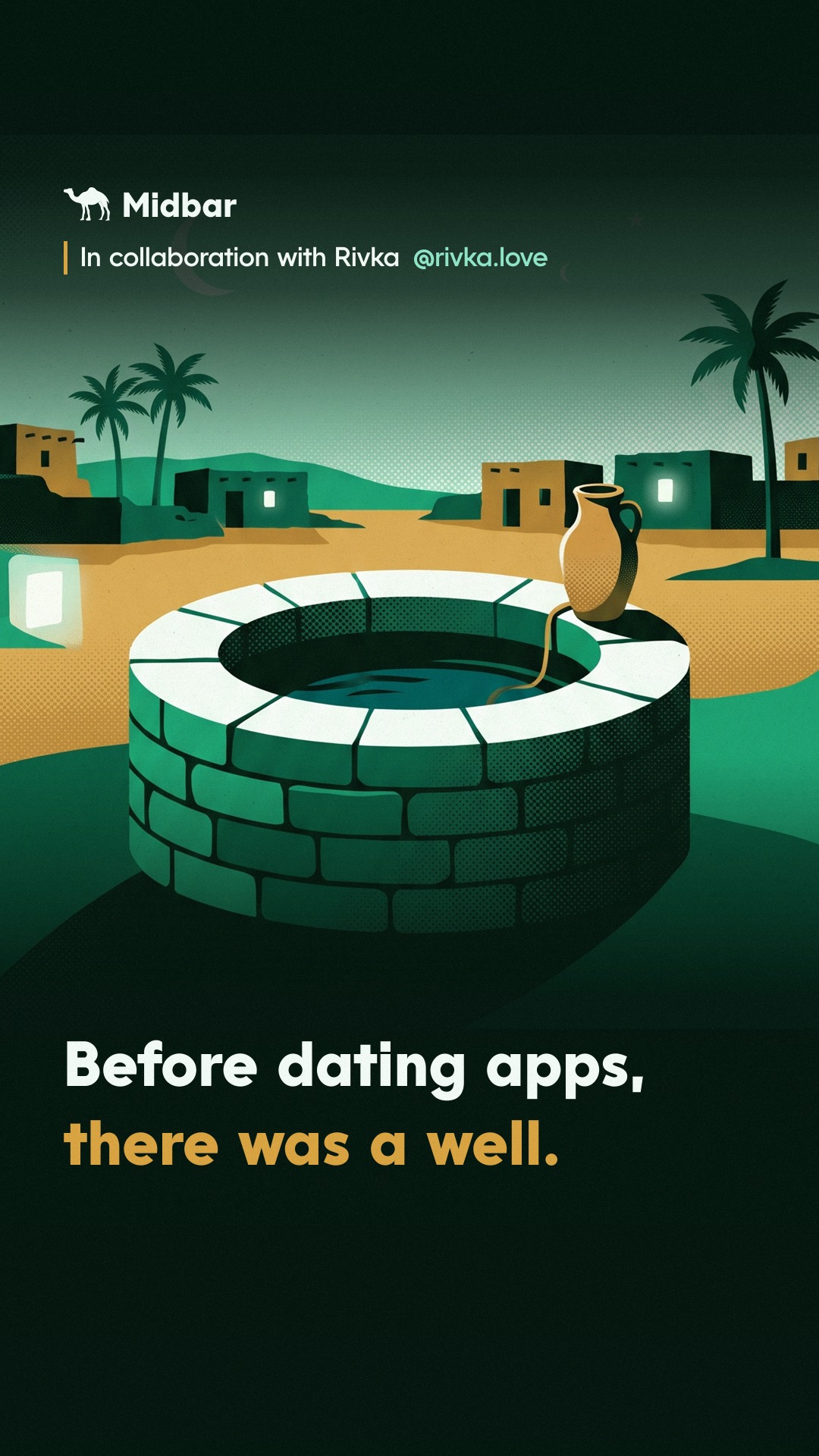
He reaches the well in the evening, when the women come to draw water, and sets a condition: the girl who answers his request for a drink with "drink, and I will water your camels too" will be the one. The test is neither beauty nor wealth: it is kindness to a stranger.
Rebecca, daughter of Bethuel, arrives before he has finished speaking. She gives him water, then runs to fill the trough for all ten animals. The next day her family wants to keep her a while longer. They call her and ask: "Will you go with this man?" She answers in one word: "I will go" (Genesis 24:58). Isaac brings her into the tent of his mother Sarah; he marries her, and he loves her.
They call her and ask: "Will you go with this man?" She answers in one word: "I will go" (Genesis 24:58).
## The noblewoman and the morning after
The midrash (Genesis Rabbah 68:4) tells of a Roman noblewoman who asked Rabbi Yose bar Halafta what God had been doing since Creation. "He makes matches," he answered. She laughed: she could do as much in an hour. He warned her that joining two people is as hard as splitting the Red Sea. She paired off a thousand of her male servants with a thousand maidservants in one night. By morning they came back hurt, each one asking to be released from the other. She admitted the rabbi was right.
Today we scroll through faces without end and meet no one. Rivka does the opposite: every evening at 7 pm, the app introduces one person, chosen by affinity after a five-minute interview, with a verified selfie.
The Genesis story does not end at the well: it ends in a tent, the one Isaac brings Rebecca into. Neither does Rivka, the app. Once you're a couple, whether you met on Rivka or elsewhere, it becomes your space for two: Rivka is an AI in your chat that suggests a Sunday outing and adds it to your shared calendar, alongside lists, key dates, the question of the day and your memories. From first match to a home of your own. On iPhone and Android, rivka.love.