Benjamin Netanyahu’s Likud wins 27 seats (20.5%), ahead of Yashar, Gadi Eisenkot’s list, with 21 (16.1%). Next come Naftali Bennett’s B’Yachad (12), the Joint List (11), Yair Golan’s Democrats (8), Ra’am (8), Avigdor Liberman’s Yisrael Beytenu (7), Otzma Yehudit (7), United Torah Judaism (7), Shas (6) and Religious Zionism (6). Eleven lists enter the Knesset.
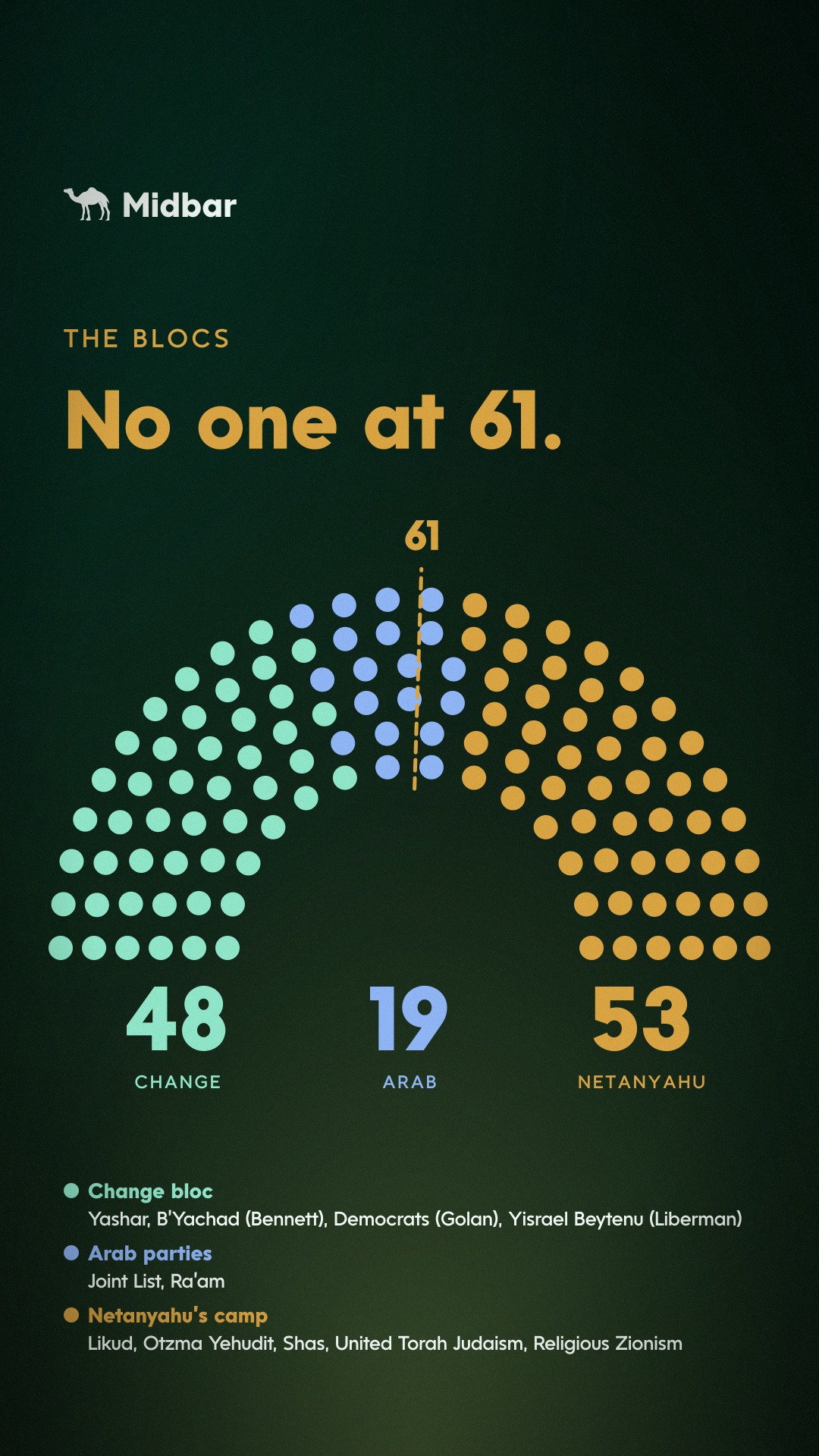
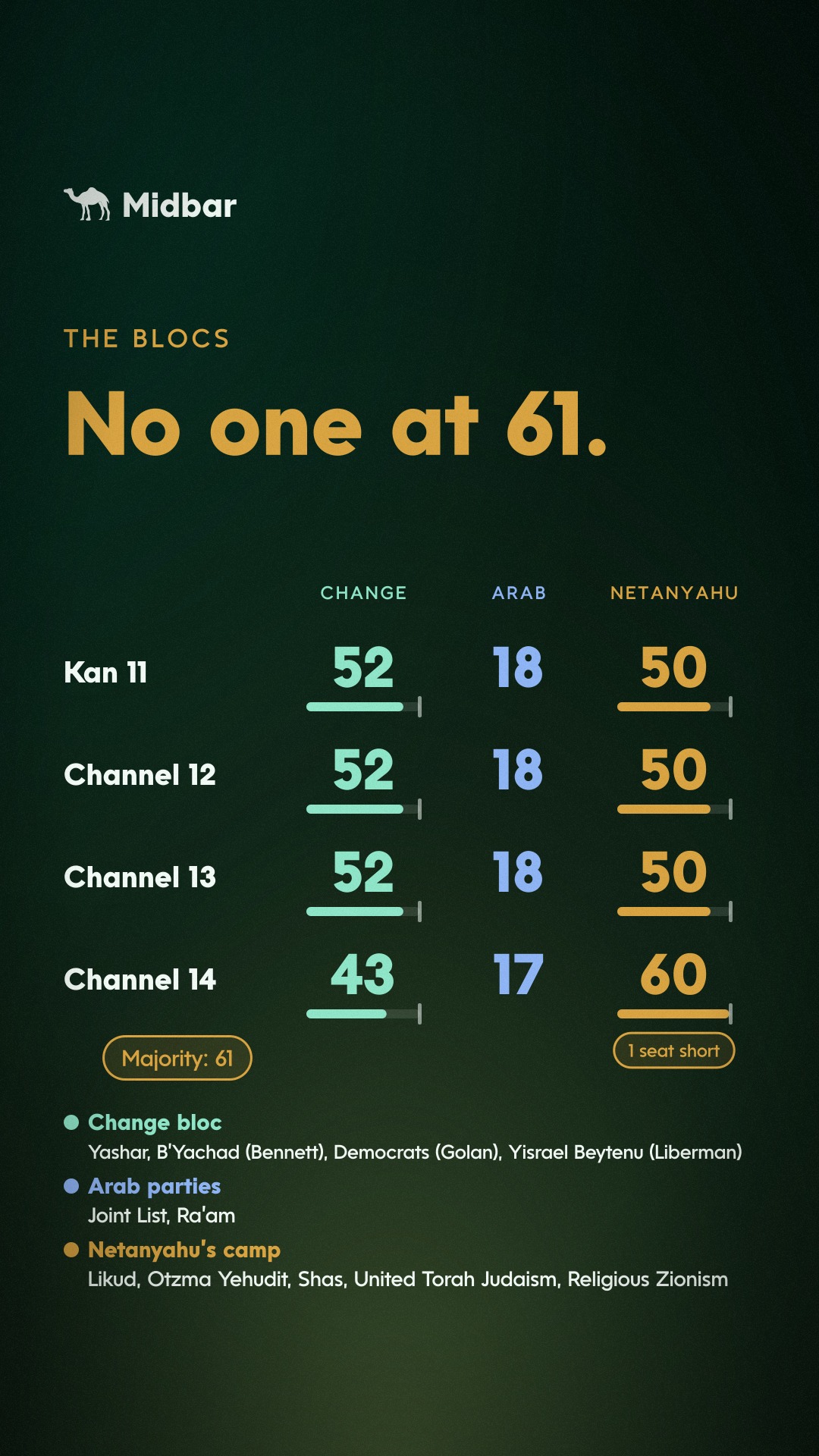
In blocs, Netanyahu’s camp (Likud, Otzma Yehudit, Shas, United Torah Judaism, Religious Zionism) wins 53 seats, the change bloc (Yashar, B’Yachad, Democrats, Yisrael Beytenu) 48, and the Arab parties (Joint List, Ra’am) 19. No one reaches the 61-seat majority. The exit polls on channels 11, 12 and 13 had the change bloc ahead (52 to 50): the count reversed the order.
Arab parties win 19 seats, their best result ever; the previous high was 15, in 2020. Shas falls to 6 seats, down from 11 in 2022. Turnout, 77.7%, is the highest since 1999.
Yoaz Hendel and Yaron Zelekha’s reservists (2.72%) and Ofer Winter’s list (1.68%) fall below the 3.25% threshold: nearly 250,000 votes that win no seat.
The change bloc only reaches 61 with both Arab parties (48 + 19 = 67), and Avigdor Liberman wants Zionist parties only; without Yisrael Beytenu, that path drops to 60. Netanyahu’s camp needs 8 seats from outside its ranks. That leaves national unity, but Gadi Eisenkot refuses to serve under Benjamin Netanyahu. President Isaac Herzog has urged the parties to avoid another election.
That leaves national unity, but Gadi Eisenkot refuses to serve under Benjamin Netanyahu.
Official results are due on November 4, and the new Knesset will be sworn in on the 10th. The president will consult the parties, then give one member 28 days, extendable by 14, to form a coalition. Follow the coalition talks in the Midbar app.