
Midbar
← Back
Israel

Foreign money in Israel's vote? The Shin Bet has one week to answer

A Supreme Court justice has asked Israel's security service whether foreign funds tried to tilt the October 27 election. Nothing is proven and Qatar denies everything. The real lesson is not about any party: a cyber superpower still has nobody in charge of guarding its own ballot.

On Wednesday, October 28, one day after Israelis elected their 26th Knesset, Supreme Court Justice Noam Sohlberg, who chairs the Central Elections Committee, sent a letter to Shin Bet director David Zini. "Serious suspicions have been brought to my attention regarding improper influence on the elections, exerted through funding provided by foreign entities acting against Israeli interests," he wrote, according to The Times of Israel. He added that he could not "attest to the substance of these suspicions," and asked the Shin Bet for conclusions within a week. The letter names no country.

Precision is the whole story here, so let's be precise. The Israeli press, led by Ynet, points to Qatar, with talk of "tens of millions of shekels" to Arab organizations. Committee officials call the intelligence "solid"; a non-political source quoted by Ynet, as reported by The Times of Israel, says the scale is "much smaller than is being made out." No amount has been confirmed. No recipient has been officially named. Doha's foreign ministry spokesman, Majed al-Ansari, called the accusations "ridiculous and dangerous" on X: "They accuse us of buying Netanyahu, buying the left, and now buying the Arab vote. If all these claims were to be believed, Qatar would probably own all of Israel."
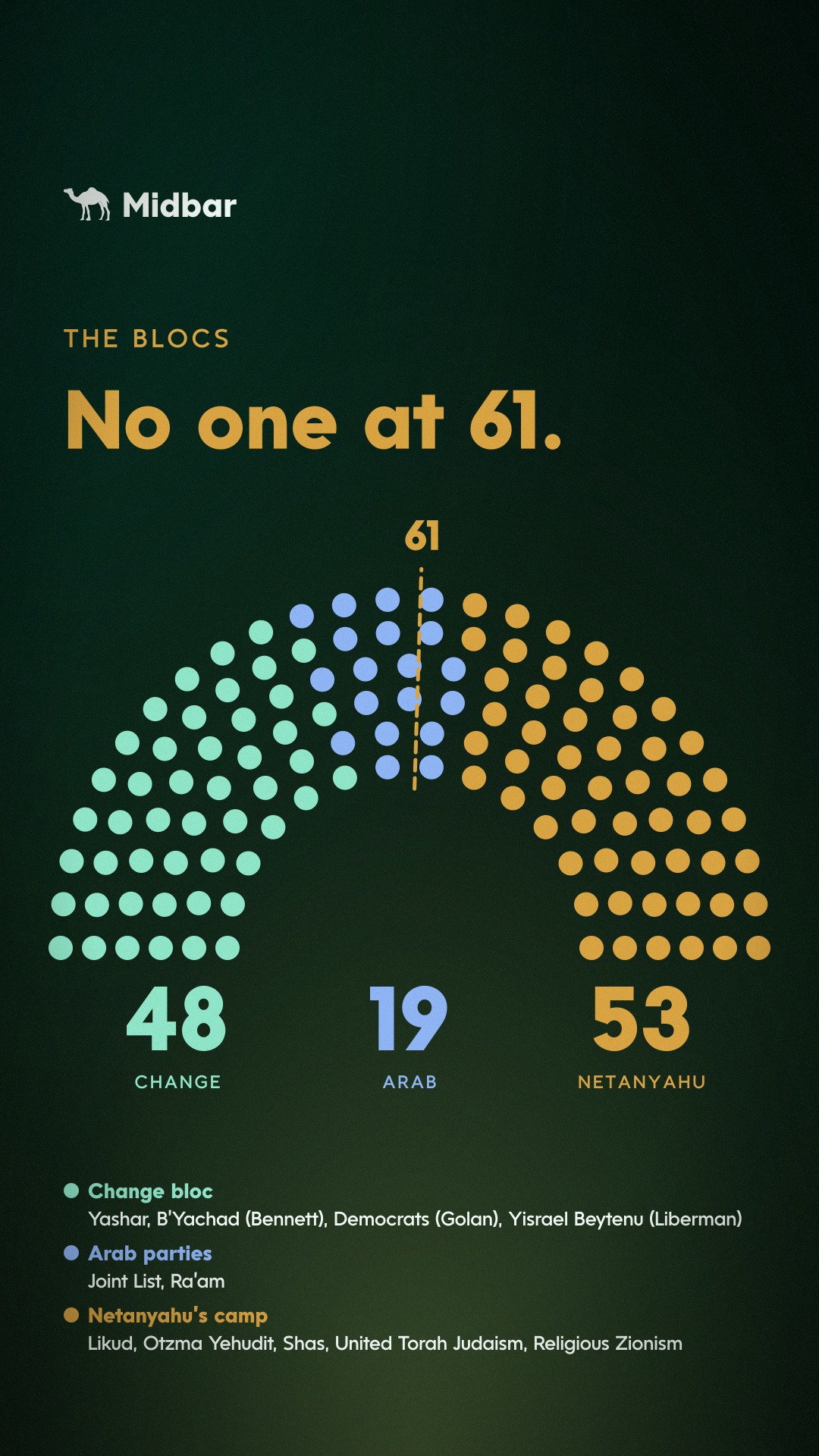
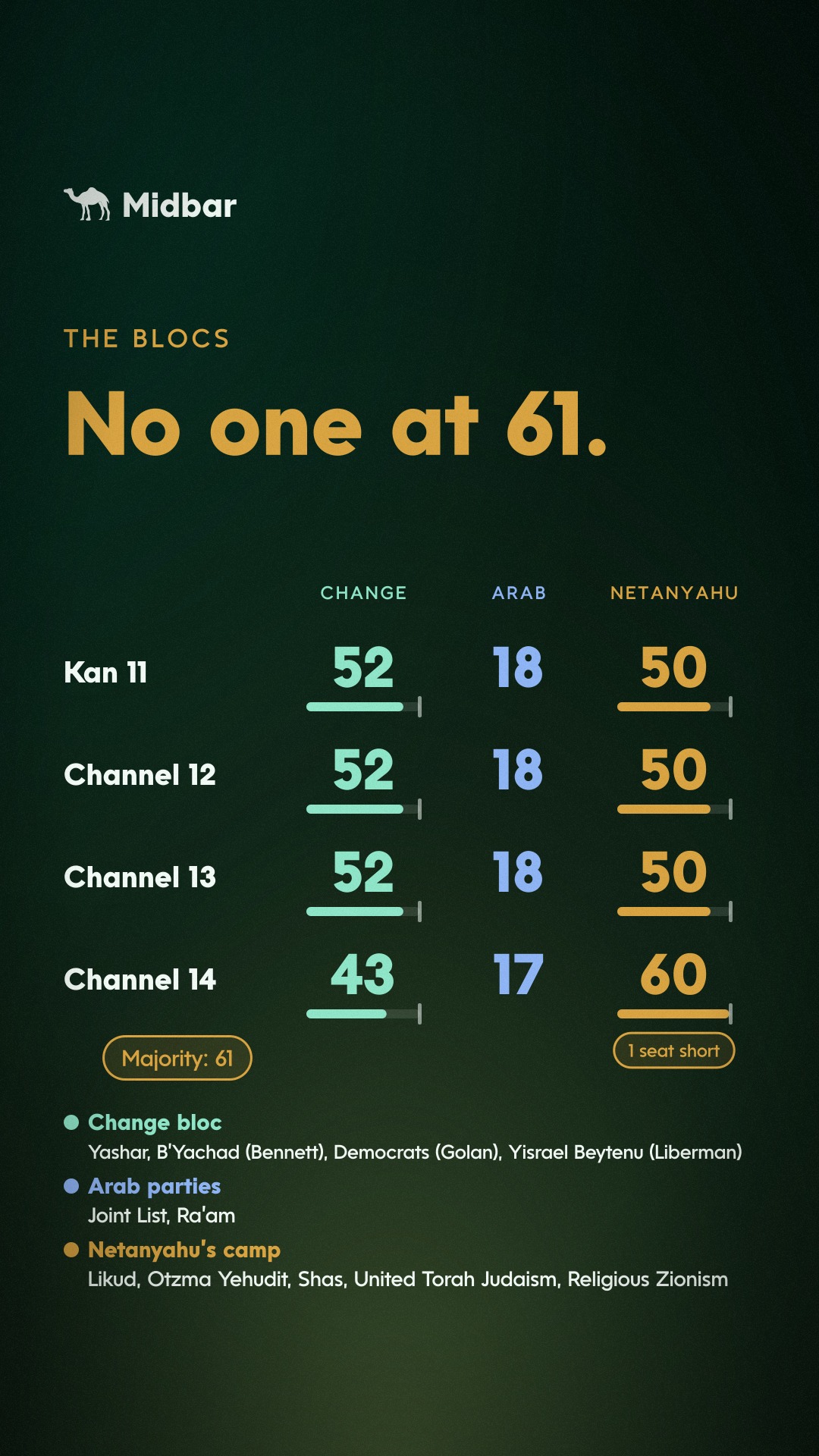
At the same time, the Committee's acting director general, Dean Livne, wrote in a letter reported by The Times of Israel that "to the best of our knowledge, there is no basis for allegations of systematic violations of election integrity." Police, cited by Ynet, said there is "no investigative or intelligence evidence supporting the allegations" of fraud. The count stands: Likud 27, Yashar 21, blocs at 53, 48 and 19.

Two things must be kept apart. Whether a foreign state tried to buy influence is a legitimate question, and a serious democracy asks it out loud, under a Supreme Court justice, with a deadline. Whether the election was "stolen" is a different claim, and no institution supports it so far. A Likud voter and a Yashar voter can hold both sentences at once. And the record Arab turnout is the vote of Israeli citizens: the question concerns foreign money, not an electorate. Whoever the Shin Bet names, if it names anyone, the voters are not the suspects. The suspects sit in Doha and Tehran.

And the record Arab turnout is the vote of Israeli citizens: the question concerns foreign money, not an electorate.

Because Iran is the documented part. On October 22, the Shin Bet announced it had taken down social-media accounts trying to manipulate the election, working with the prosecution's cyber unit and the Committee. An INSS report the same day, cited by Alhurra, relied on the open-source firm Golden Owl: 157 profiles on X, writing in Hebrew and posing as Israelis, showed links to Iran. Check Point, per Calcalist, counts about 2,300 attacks a week on Israeli public bodies, up 82% in a year, with the Iranian group Handala explicitly tying its attacks to the election. None of this is new: in 2021, FakeReporter documented an Iran-linked network posing as Israeli activists before the March vote.

Now the part nobody is highlighting. In July, State Comptroller Matanyahu Englman wrote of foreign online influence that "there is still no national policy, and no government body is leading efforts to address the issue." The Shin Bet began preparing for this election only in January 2026; the National Security Council dropped the file in August 2025. The country that sells cyber defense to half the planet has no one whose job is to protect its own ballot. That is the gap, and it belongs to no party.

The encouraging news is that the system still works: a justice asks, the police answer, a director general speaks on the record, and a clock is running. In December 2019, then-chairman Hanan Melcer could say: "Foreign interference in the election campaign didn't succeed in Israel." Whoever forms the next government has an easy first deliverable that every bench can vote for: name the body, write the doctrine. Keeping Doha and Tehran out of the voting booth is one fight all Israelis share.

#Israel#IsraelElections#ShinBet#Qatar#Iran#ForeignInterference#Knesset#Midbar

Midbar lives on its readers.

No paywall, no account, no tracker. Your support, once or every month, funds what you just read.

Support Midbar

Read next