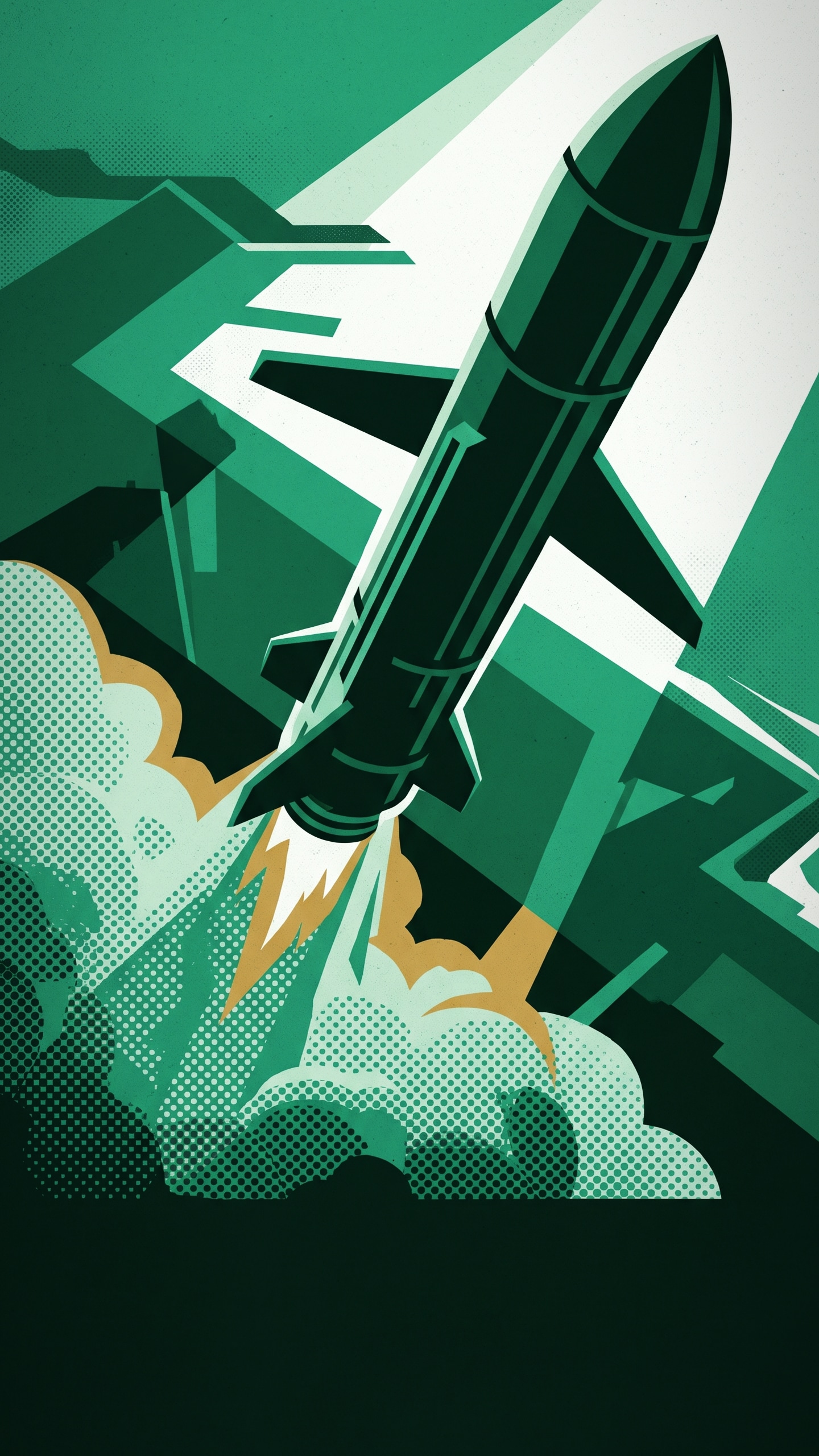
According to Rafael, the missile can be fired from fighter jets, missile boats or ground launchers. It flies low, hugs the terrain in all weather, and finds its target by electro-optical image recognition rather than satellite navigation: it was built, Breaking Defense writes, for environments where GPS is jammed. An operator stays in the decision loop. Rafael's video shows it striking a bunker, a ballistic missile launch site and large ships. Chairman Yuval Steinitz calls it "the best cruise missile of its kind in the world."
What Rafael does not say matters just as much. No range, only "long range," beyond the Ice Breaker's roughly 300 kilometers. No speed. No price, beyond "super competitive." No customers, and no word on whether the IDF has ordered it. The Jerusalem Post expects it operational around early 2027, without citing a source. Stealth and precision are the manufacturer's claims, and Globes is right to point out there are no public data behind them. So read this as a product launch, with the honesty a product launch deserves.
Still, the calendar speaks where Rafael stays quiet. On Tuesday, Iran unveiled a new underground "missile city." On Monday, Donald Trump said he had no plans, for now, to order new strikes, with the Strait of Hormuz and the nuclear file still unresolved. Ynet reports Israel is preparing for a possible new round against Iran. And Globes, working from field imagery the army has not confirmed, believes Ice Breaker missiles were already used in Israel's 2026 strikes on Iran. Rafael names no enemy. Its representatives told Calcalist only this: "The enemy studies us."
Here is the detail most coverage skipped. Calcalist, citing American reports, says that in a new conflict with Iran, US forces could fire up to 850 Tomahawks in the first weeks, roughly a quarter of their stock. That is the real bottleneck of the next war: not resolve, not pilots, but cruise missiles. Every one America fires is one it cannot fire elsewhere.
That is the real bottleneck of the next war: not resolve, not pilots, but cruise missiles.
Now look at what Rafael reports: six users of the family, unnamed, more than a billion dollars and more than a thousand missiles on order, and a cheaper sibling, Covenant, unveiled last month. A week after Washington announced the end of military aid, Israel is not standing in line as a client of the alliance. It is building the one thing the alliance may run short of, and it is doing so in a company that belongs to the Israeli public, not to shareholders.
There is a quieter message in the guidance system itself. A missile that navigates by recognizing the landscape does not need to borrow anyone's satellites to find its way. Sovereignty, written into the hardware. The enemy studies us. The answer, from Haifa to Washington, is that we study harder, and we build.