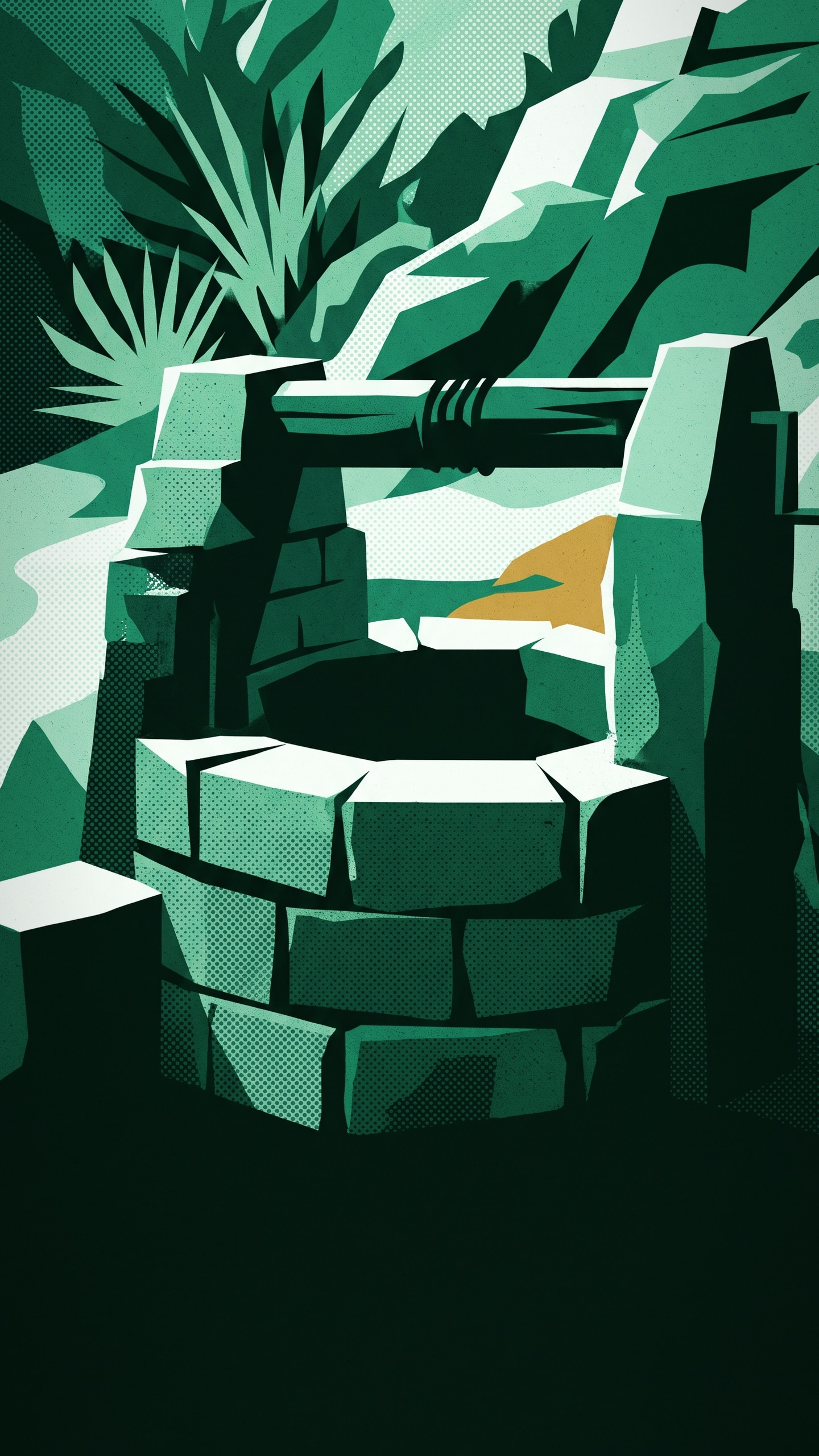
A famine strikes. Isaac stays in the land, in Gerar, among the Philistines. He sows "and found in the same year a hundred-fold" (26:12). Then comes the detail the Torah lingers on: "all the wells which his father's servants had digged in the days of Abraham his father, the Philistines had stopped them, and filled them with earth" (26:15). Not poisoned. Not captured. Filled with dirt, so nobody could drink from them again.
Isaac's answer is a verb. וַיָּשׇׁב יִצְחָק וַיַּחְפֹּר, "and Isaac digged again," and then the part that matters: "he called their names after the names by which his father had called them" (26:18). Only then does he dig his own. The first is contested: "The water is ours," say the herdsmen of Gerar, and he names it Esek, quarrel (26:20). The second is contested too; he names it Sitnah, hostility (26:21). The third nobody fights over. He names it Rehoboth, room: "For now the LORD hath made room for us, and we shall be fruitful in the land" (26:22).
The first is contested: "The water is ours," say the herdsmen of Gerar, and he names it Esek, quarrel (26:20).
Nahmanides, the Ramban, is candid about the plain reading: a son redoing his father's work brings Isaac little honor. So he reads it as prophecy. A well of living water stands for the House of God that Isaac's children will build. Esek is the First Temple, disputed by the nations until they destroyed it. Sitnah, the harsher word, is the Second; the same word appears in Ezra 4:6 against the inhabitants of Judah and Jerusalem, and that Temple fell too, followed by exile. Rehoboth is the Temple still to come, built without quarrel.
Here is what I take from it. Abraham is the founder, the man who leaves Ur. Isaac is the maintainer, the only patriarch who never leaves the land, even in famine. Nobody writes songs about maintainers. Yet the Torah gives him an entire chapter to teach the order of continuity: before you build anything new, you reopen what your parents opened, and you keep their names on it. Anyone who has watched a Jewish institution, a campus Hillel, a small-town shul, a community center, be quietly choked rather than openly attacked knows what dirt in a well looks like. Isaac's reply is not a lawsuit or a speech. It is a shovel, and a name.
And notice what he does not do. He does not win Esek. He does not win Sitnah. "He removed from thence, and digged another well" (26:22). The Torah describes no victory, only a man who keeps digging until there is room. That is a strange kind of strength, and it is ours. Every Jew who teaches a child the alef-bet, keeps a Shabbat table lit, or reopens a shuttered synagogue is digging again and keeping the old names. Haredi or secular, Sephardi or Ashkenazi, in Jerusalem or in Jersey: we drink from the same wells, and they carry our father's names.